


Step Inside Moronobu's Genre Scenes of the Twelve Months: Masterpieces of Early Ukiyo-e at Seikado Bunko Art Museum in Marunouchi

更新日:11 時間前
Exhibition period divided into two phases, with some changes to the items on display.
Part 1: June 27 (Sat.) - July 26 (Sun.)
Part 2: July 28 (Tue.) - August 23 (Sun.)

Focusing on Hishikawa Moronobu's ( ?-1694) finest original paintings, this exhibition showcases works by the Genroku-era painter Hanabusa Itchō (1652-1724) and Moronobu's successor Miyagawa Chōshun (1682-1752), other members of the Miyagawa school, and artists contributed to the nineteenth-century revival of Genroku culture.

The Seikado Bunko Art Museum has been located on the first floor of this building—designated an Important Cultural Property—since October 2022.
A pioneer of the ukiyo-e genre, Hishikawa Moronobu (?–1694) was born in Hota, Awa Province (present-day Chiba Prefecture).
In the late 17th century, he transformed woodblock prints—previously used only as book illustrations—into independent works of art.
He gained acclaim for his dynamic focus on the bustling, fashionable street life of Edo (modern-day Tokyo), depicting beautiful women (bijin-ga), popular kabuki actors, and lively festival scenes.
Prologue: Shining a Spotlight on Ordinary People! Paintings of the Genroku Era Beginning with Moronobu’s Early Work
This section displays masterpieces depicting vibrant lifestyles of ordinary people
during the early modern period, specifically from the end of the seventeenth to the beginning of the eighteenth century (Genroku Era).
*Can you hear the noise of the croud depicted along the Kamo River?
Important Cultural Property
Scenes along the Riverside at Shijō, Kyoto
Edo period, c. 1624–44 Seikado Foundation
This work is displayed in Part 1 and 2.
*Almost everyone in Japan will recognize this iconic figure! Painted by Hishikawa Moronobu in pigments on silk, it depicted a fashionable woman in tne Genroku era.
He was fascinated by unusual depictions of women: her face is only visible from the side, eraborate depiction on beautifully set off hair-do, and large patterns on the kimono, which were trendy during the Genroku era (1688–1704).
Carrying on the most dynamic expressions of early-modern genre paintings, he introduced groundbreaking motifs, styles, and forms to the art world.

This masterpiece has returned to Tokyo National Museum after the 16-day display.
*Moronobu depicted elegant youngstars in fashinable kimonos.

This work is displayed from July 14 to August 23.
*Hanabusa Itchō (1652–1724), who admired Moronobu’s style, was a celebrated Japanese painter and haiku poet of the middle Edo period. He is best known for pioneering a lively, witty genre scenes (fūzokuga).
Following Moronobu's interest in everyday life, Itchō depicted the start of an ordinary day for the boy with a refined touch.
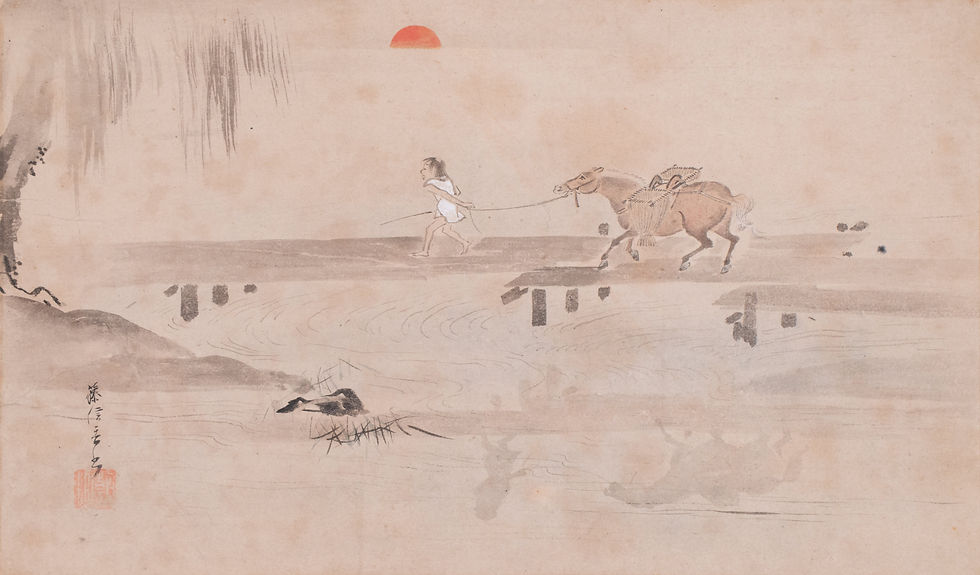
This work is displayed in Part 1 and 2.
*Ogata Kōrin (1658–1716), Kyoto-based artist, refined Moronobu's style.
As a painter, he epitomized Genroku culture.
He depicted cormorant fishing boat on the Ōi River in Yamashiro Province (present-day Arashiyama, Kyoto) with smoothly skilled brushwork.

This work is played in Part 1 and 2.
Act 1: Step Inside Moronobu’s Genre Scenes of the Twelve Months!
*This masterpiece (十二ヶ月風俗図巻, Jūnikagetsu Fūzoku Zukan) from his final years is hand-scroll painting (Nikuhitsuga), featuring monthly customs and manners of townpeople including samurai. It is believed to have been specially commissioned by a wealthy family.
Looking through this scroll will make you as though you have stepped into
a theater from the Genroku era.
•The first scroll (first six months of the year) in its first phase, June 27 (Sat.) - July 26 (Sun.)
•The second scroll (latter six months of the year) in its second phase, July 28 (Tue.) - August 23 (Sun).
The screen below depicts a scene from April. This section is on display in Part 1.

The screen below depicts a scene from June. This section is on display in Part 1.
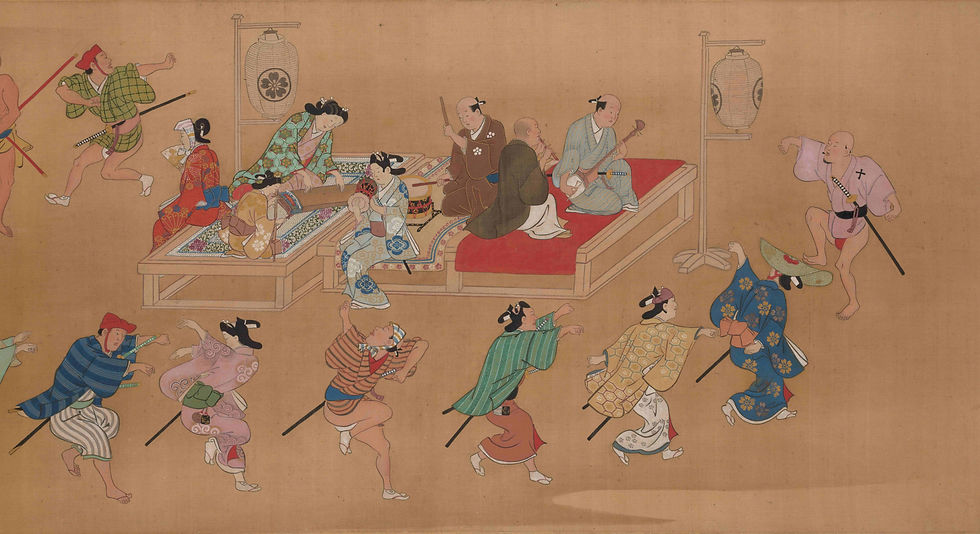
The screen below depicts a scene from December. This section is on display in Part 2.

Act 2: The Evolution of the Hishikawa and Miyagawa Schools as Seen in Folding Screens
*Moronobu produced these unusually large folding screens depicting various elements of Edo-style kabuki from dancing performers to backstage workers.
The folding screens may have been commissioned by an affluent patron.
You can see everything at Kabuki theater on that era.


These screens are displayed in part 1.
*These folding screens painted in the style of Moronobu by an artist of the Miyagawa or Kawamata school, depict cherry-blossom viewing at Kan’ei-ji Temple in Ueno. All the people shown on screens share us their happiness with us.
•This right-hand screen depicts cherry-blossom viewers around Kan’ei-ji Temple.
You can see four women dancing behind a temporary curtain made by draping their outer kimonos over a cord tied between cherry trees.

•This left-hand screen depicts pleasure boats passing under a bridge over the Sumida River as fireworks go off. You can also see the Yoshiwara red-light district and Mimeguri Shrine.

These screens are displayed in part 1 & 2.
*Hishikawa Moronobu depicted various types of Edo-period craftsmanship.
Can you guess what they are making?
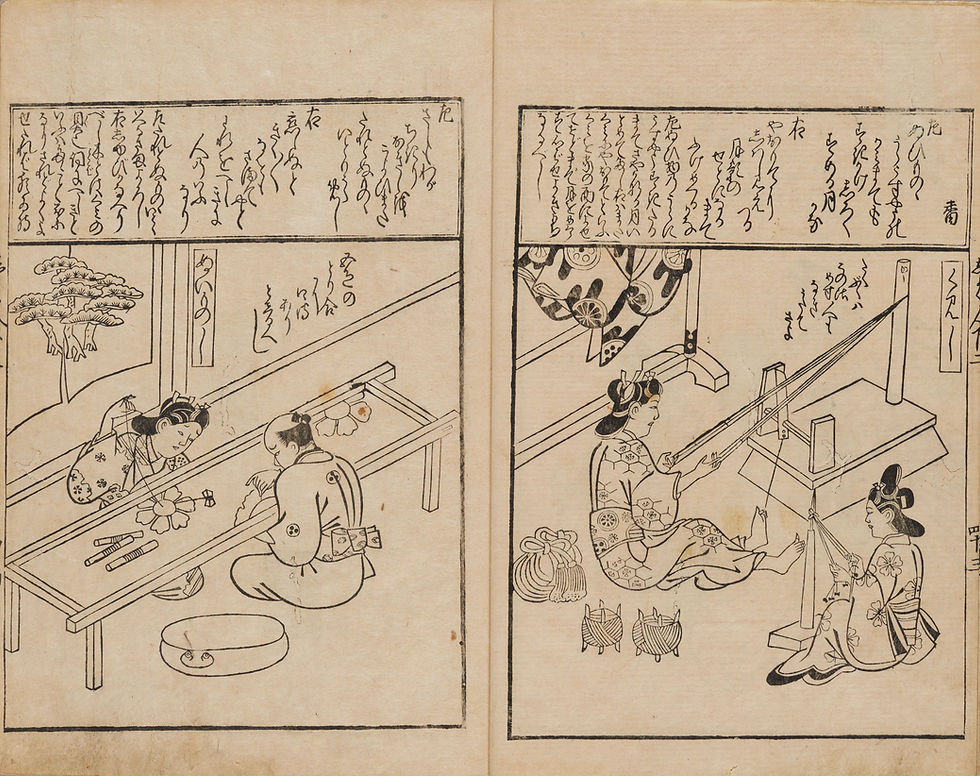
This work is displayed in Part1 & 2.
Finale: The Genroku revival
*This masterpiece from Hanabusa Itchō’s later years is a brilliant snapshot. He depicted a lively and humorous scene of diverse people patiently waiting for the rain to pass under the eaves of a large shrine or temple gate.
How many people and animals can you spot in the painting?

This work is displayed in Part 2.
*This masterpiece handscroll is by Miyagawa Chōshun, who further refined Moronobu’s artistic style. It depicts a real-life event: a troupe of performing artists visiting a samurai residence. The story unfolds in sequence, showing three scenes, though this display shows only the first and second.
Unlike most prominent ukiyo-e artists of his era, Miyagawa Chōshun focused exclusively on direct brush painting (nikuhitsuga) rather than producing woodblock prints. His school was renowned for depicting elegant figures, lively town festivals, and intimate glimpses into the world of Edo entertainment.

This section is on display from August 18 to 23.
*Suzuki Kiitsu (1796–1858), one of the late Edo period’s most celebrated masters, is renowned for his vivid colors and bold, decorative compositions. In this work, he depicted three famous courtesans from the Yoshiwara brothel Miuraya, Nagato (right), Takao (center), and Usugumo (left), against backdrops of cherry blossoms, bush clovers and the moon, and a snow-covered willow branch, which are likened to a flower, the moon, and snow, respectively.
He incorporated the distinctive kimono patterns and elaborate hairstyles of the Genroku era (1688–1704).
Three Women Representing Snow, Moon and Flower By Suzuki Kiitsu Edo period, c. 1818–30 Seikado Foundation
These works are displayed in Part 1 and 2.
For more information, please access here


コメント