


Komura Settai in Perspective: A Secret Sense of Beauty at Chiba City Museum of Art

更新日:5月29日
The exhibition features Komura Settai (小村雪岱)(1887-1940 ), an artist who crafted a singular world of beauty through his mastery of book design, illustration, and stage design.
The exhibition is presented in two phases:
First Term: April 11th (Sat)-May 6th (Wednesday, Public Holiday)
Second Term: May 8th (Fri)-June 7th (Sun)
As there are significant display changes during the exhibition period,
repeat visits definitely offer the chance to discover new works and fresh perspectives.
Let's explore the subtle, hidden aesthetics of Settai's vision.
Prologue: A Secret Sense of Beauty
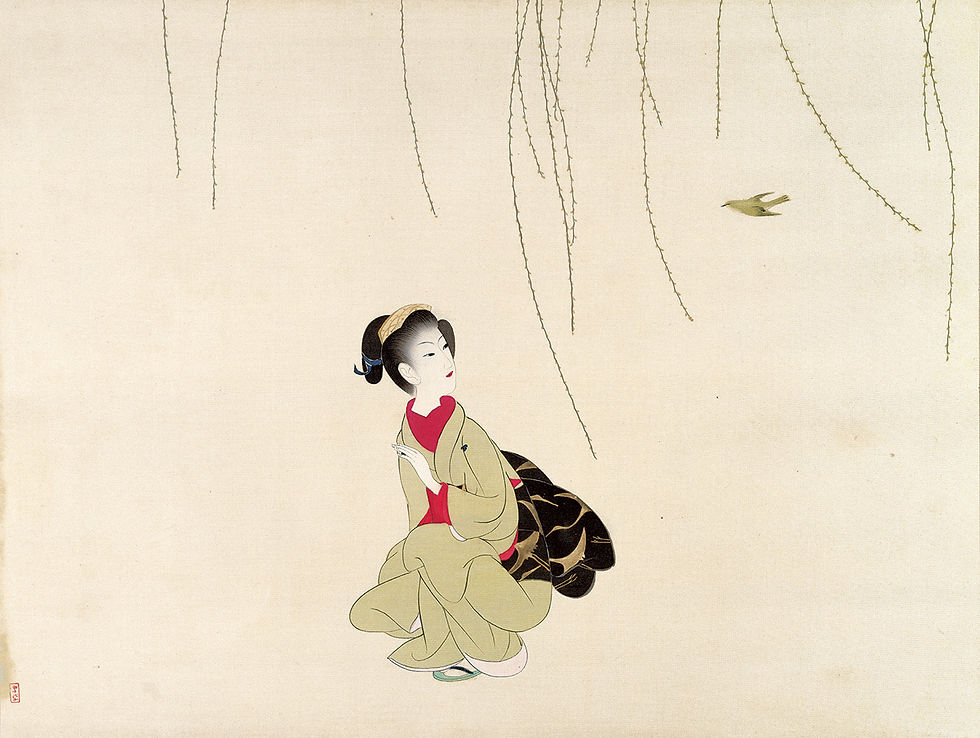
This masterpiece opens the exhibition. Its pale color palette reflects Komura Settai’s Edo-inspired aesthetics and his deep nostalgia for Meiji-era Tokyo.
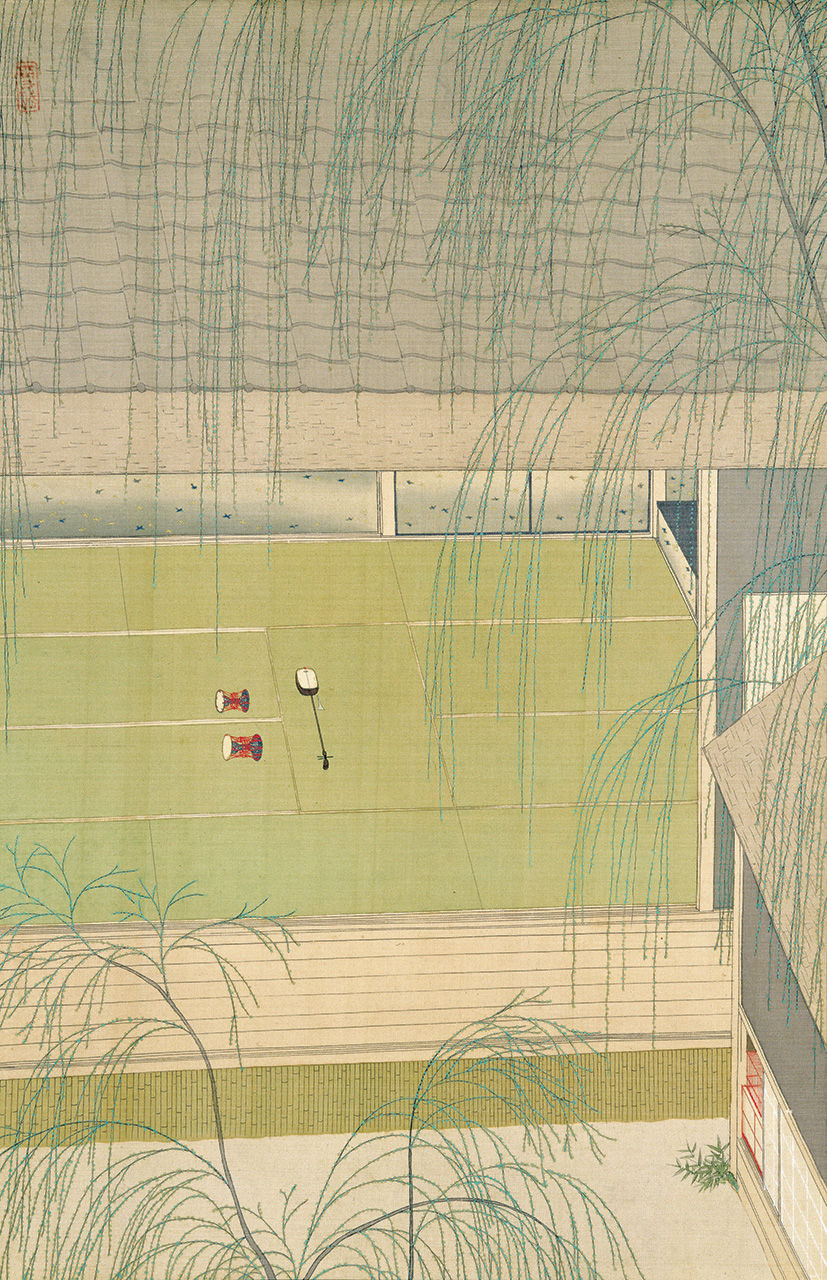
Komura Settai, "Willow Tree", circa 1924, color on silk,
collection of Saitama Prefectural Museum of Modern Art
*Early-period display
Is the owner of this shamisen about to appear, or have they just finished their performance?
The painting invites us to imagine several unfolding stories.
Chapter I: The prelude to "Komura Settai
After acquiring basics of painting at Shimomura Kanzan's class in the Department of Tokyo Bijutsu Gakko (Tokyo Fine Arts School), Settai supported himself through various illustration projects, which contributed to his later artist career.
He read many books written by Kyōka and was deeply moved by the author's world of romance and fantasy.
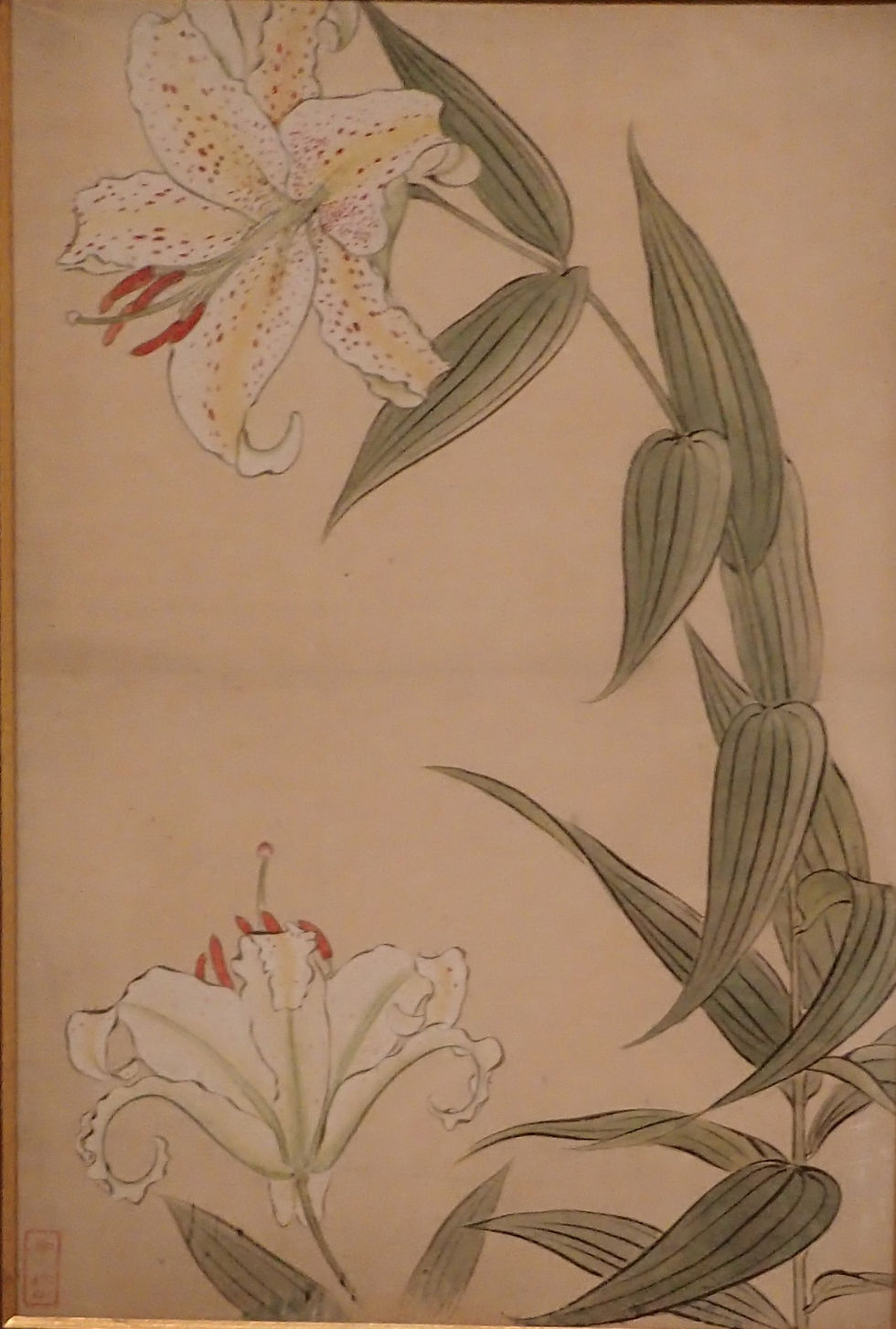
*The image was taken by Michi at the press preview.
Chapter II: Izumi Kyōka, NihonbashiーThe Start and Efflorescence of Book Design
In September 1914 (Taisho 3), at the age of 27, Settai ushered in a new era of book design with his work on Izumi Kyōka's Nihonbashi. He gained widespread acclaim for the book's striking, modern compositionーmost notably its depiction of a vast swarm of fluttering butterflies—and its masterful use of polychrome woodcut techniques.
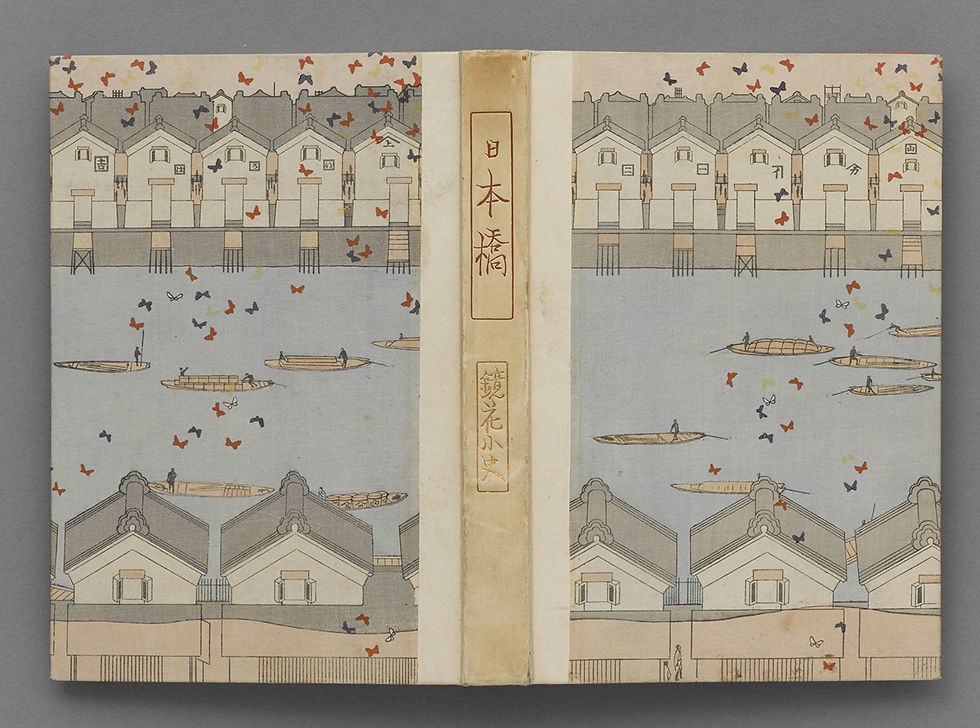
Komura Settai, Izumi Kyōka Nihonbashi
*Latter-period display
Chapter III: A Designer's Eye—From Classic to Modern
Through his connection with Kyōka, Settai began designing books, which allowed him to deepen his friendships with influential writers such as Minakami Takitarō, Kubota Mantarō, and Satomi Ton through Kyōka.
His versatility was evident in his commercial work; He famously created Western-style illustrations for advertisements and packaging of the cosmetic company Shiseido.
Furthermore, he illustrated Satomi Ton's "Tajō busshin", contemporary serial novel published in newspapers.
On September 1, 1923 , the Great Kanto Earthquake occurred, which left the city in ruins. In the aftermath, Matsuoka Eikyū, a leading figure of the new Yamato-e movement, invited Settai to join a project at the Tokyo School of Fine Arts dedicated to copying old master paintings. Eikyū continued to submit his work to various exhibitions. Meanwhile, Tajima Kijirō, a devotee of Kyōka, introduced Settai to the world of theater, where he began his career as a stage designer.
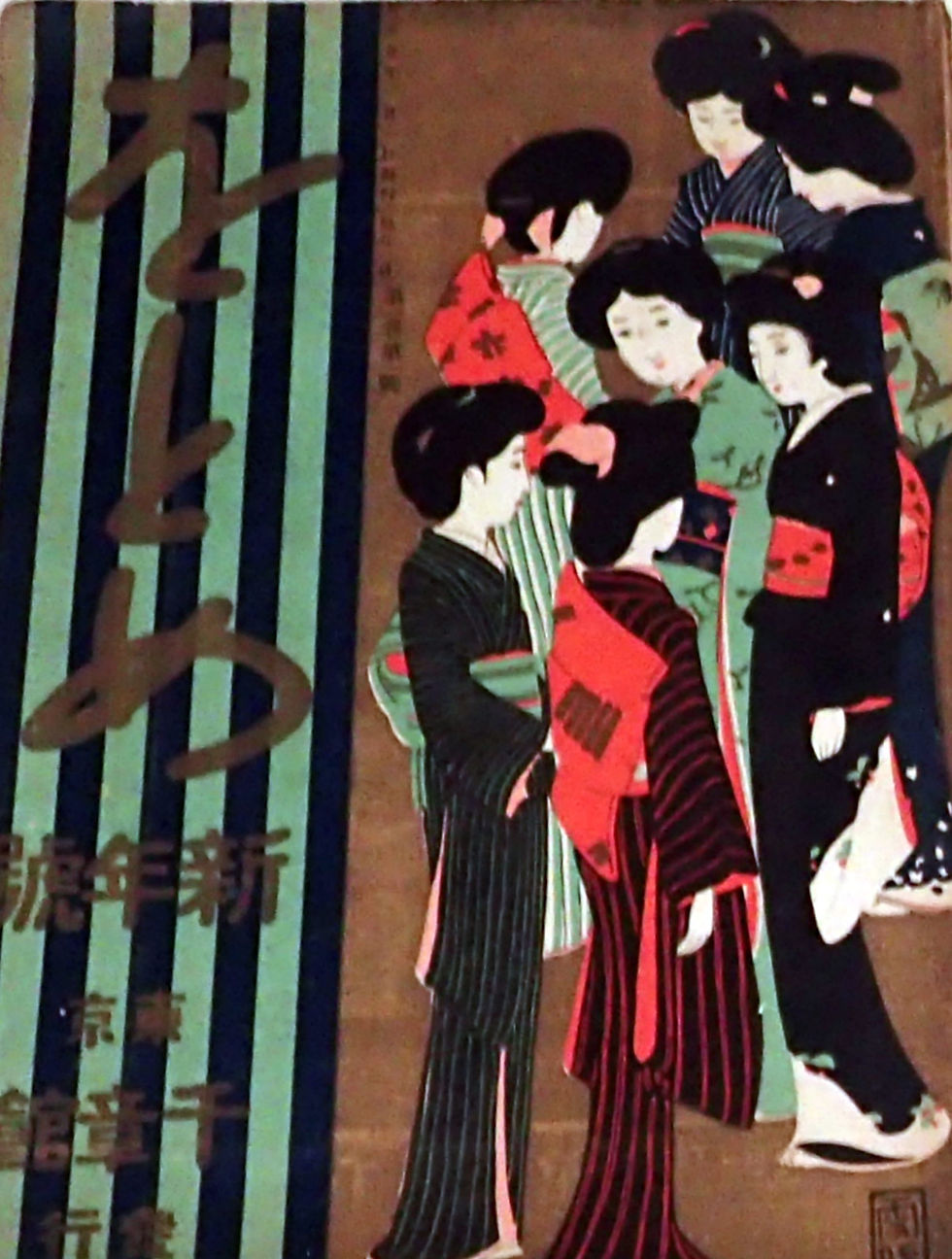
This book was published on January 1916 (Taisho 5) from Senshōkan,Mr. Kōji Sanada
*The image was taken by Michi at the press preview.
Chapter IV: A Period of Challenge and Exploration: 1926-1931
In the early Showa era, Settai made modern attempts in the designs for several books, and
Settai enriched his vocabulary remarkably through illustrating Kyōka's book.
His stage designs—characterized by a painterly freshness rooted in his training in Japanese painting and a harmonious balance that enhanced the actors—were received with great acclaim.
Thus, Settai expanded his repertoire across various genres. These efforts fueled one another, leading to a synergistic ripening of his overall style.

Butterfly from Kuraku, No. 5, Vol.
"Kuraku" was a literary journal published from Platon Co. in Osaka.

Plan of Stage Setting for "Ippongatana Dohyoiri", prologue, scene 1, In Front of Abikoya, an Inn in Toride
Chapter V: From the "KyūKyūKyū-Kai" Gatherings
Settai expanded his professional circle through the "KyūKyūKyū-Kai", a group composed of Kyoka's friends and fellow writers. From May in 1928 (Showa 3) until Kyōka's death in 1939 (Showa 14), the group met monthly at Fujimura, a Japanese-style restaurant in Nihonbashi.

*The image was taken by Michi at the press preview.
Chapter VI: The Quintessence of Illustrations—The aesthetics of Iki and Tsuya
Collaborating with writers such as Kunieda Kanji and Shimozawa Kan, Settai produced illustrations defined by a unique sense of scale. His work featured tense line drawings, stylized poses (particularly of women), and bold black planes set against negative space. Through these techniques, he established the unparalleled "Settai style"—characterized by his iki (stylish) men and tsuya (alluring) women.
His contributions helped turn these Edo-period tales into major cultural hits.

Chapter VII: In Response to the Demand—Book Design, Stage Design, and Painting Reach Maturity
As Settai entered Showa Era, Settai's confidence grew. He devoted himself into designing stage settings for the famous plays of Tsubouchi Shōyō and Kyōka.
At the same time, he was highly sought after by private collectors for his bijinga. The incredible precision of his lines and his delicate brushwork gave these figures an elegance that allows viewers to connect deeply with the scene.
Chapter VIII: Farewell: 1939-1940
Settai's mentor Kyōka passed away on September 7, 1939 (Showa 14).
Following this loss, Settai spent many busy days paying homage to Kyōka and his own work. He suddenly passed away on December 3, 1940 (Showa 15) at the age of 53. The news came as a profound shock to his many acquaintances in the theater, literary, and art circles.
The eighty-sixth illustration for Hayashi Fusao's Saigō Takamori remains his final work.
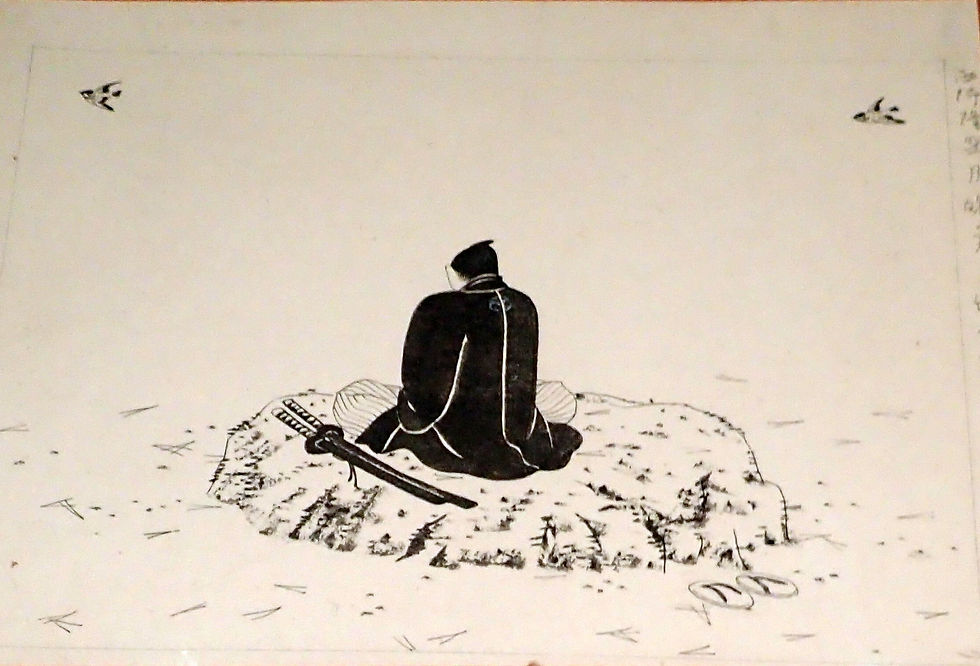
Komura Settai, Saigō Takamori, Part 2, Tsukisiro no maki, by Hayashi Fusao, Saitama Prefectual Museum of Modern Art
*The image was taken by Michi at the press preview.
Epilogue: Posthumous Commendation
Settai's sudden death was a profound loss to the art world. Looking back on his career, he left behind a relatively small number of paintings, largely because he was so devoted to the demanding fields of illustration and stage-design. To preserve his vision, Adachi Toyohisa and the Takamizawa Mokuhansha published woodcut printings based on his original paintings. Thanks to their efforts, we can still appreciate Settai's graceful brushwork and his unique sense of Iki and Tsuya today.

Komura Settai, Osen, The Museum of Modern Art, Saitama,
(Posthumous publication)
*The image was taken by Michi at the press preview.

*Early-period display

Komura Settai, Spring Rain, published by The Adachi Institute of Woodcut Prints, Kiyomizu Sannenzaka Museum
*The image was taken by Michi at the press preview.
More information, please access here


コメント